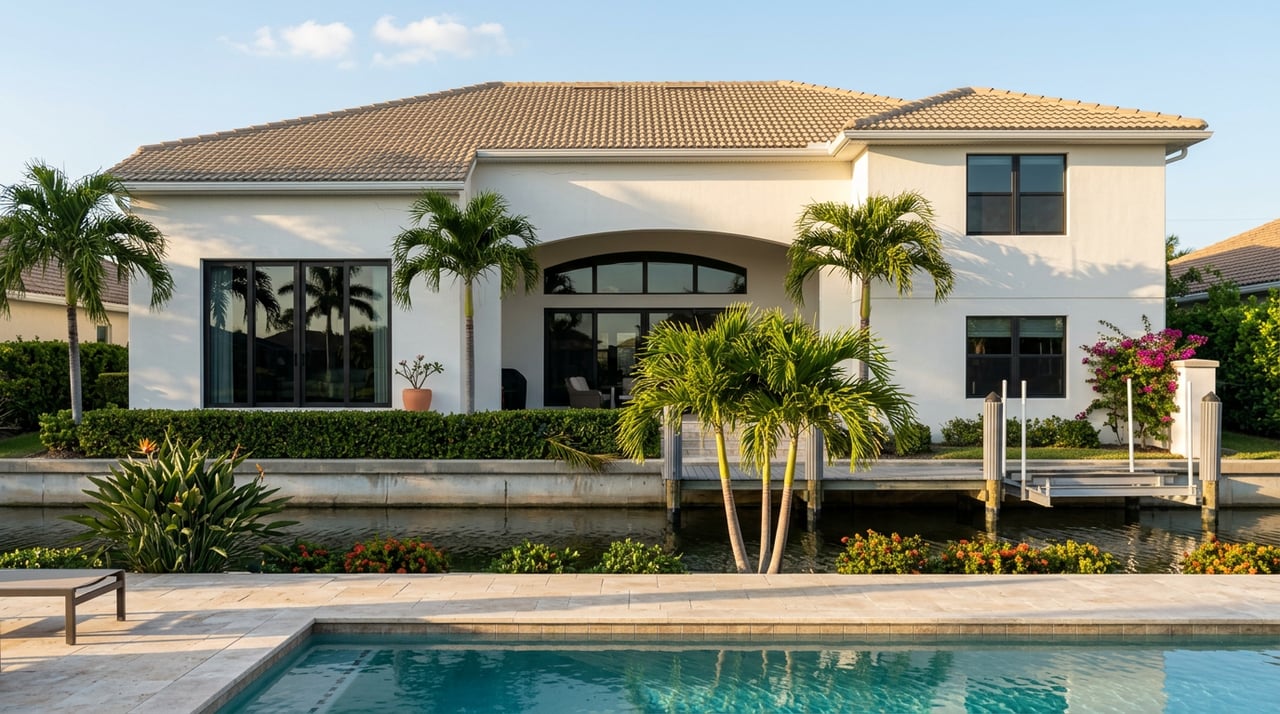
Open any national portal and Cape Coral looks like a single market. Redfin puts the median sale price at $360,000 for the three months ending May 2026, down 2.1% year over year. Zillow's Home Value Index reads $337,346 as of June 30, 2026. Both numbers are accurate. Neither is useful.
The reason: Cape Coral is not one housing market. It is at least three, stacked in a hierarchy defined by what the canal behind the house connects to. And in mid-2025 the city removed a piece of infrastructure that quietly redrew the top of that hierarchy.
If you are comparing Cape Coral to Naples or Fort Myers using a portal median, you are comparing a number that doesn't correspond to any actual home you can buy. Here is what the median is hiding, and how to read a Cape Coral listing once you know.
The three-tier hierarchy behind the median
Year to date in 2026, the citywide median Gulf-access single-family home is running around $730,500. The freshwater canal median sits closer to $405,000. The off-water median, a home with no canal frontage at all, lands around $332,000. That is a spread of roughly $400,000 across three tiers of what portals report as one market.
| Tier | 2026 YTD median | What the water actually is |
|---|---|---|
| Gulf-access (direct) | ~$730,500 | Open route to the Caloosahatchee, no bridges, no locks |
| Gulf-access (indirect) | ~$550,000–$700,000 for a 3/2 | Reaches the river, but under fixed bridges (9–15 ft clearance) |
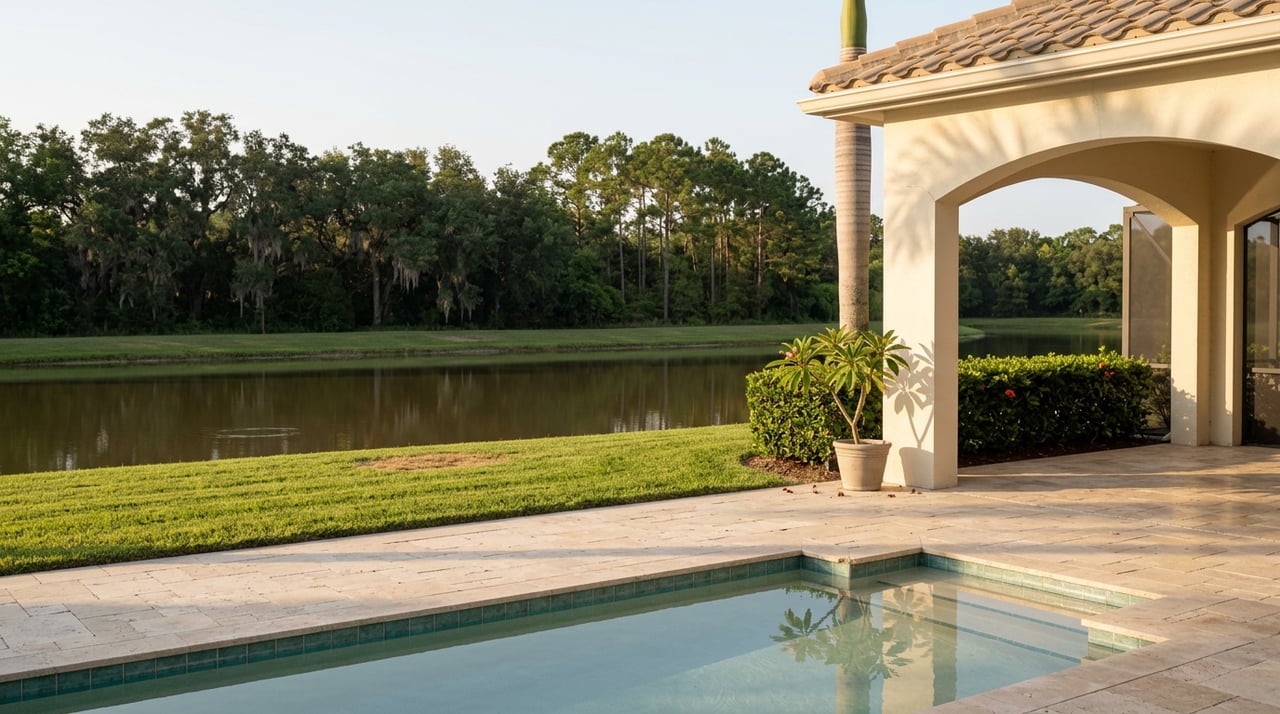
| Freshwater canal | ~$405,000 | Landlocked; kayak and paddleboard, no boat trip to Sanibel |
| Off-water | ~$332,000 | No canal frontage |
Two houses of the same square footage, the same year built, and the same finish quality will not appraise the same across these tiers. They will not sell for the same number. The MLS field that reads "Gulf access" covers both the direct and indirect tiers, and a listing description will use those two words interchangeably. The route the boat actually takes is the difference between a $700,000 house and a $1.2 million house.
What changed at the Chiquita Lock
For four decades, boaters leaving the South Spreader canals of southwest Cape Coral had to pass through the Chiquita Lock, originally built in the 1980s to filter stormwater runoff before it reached Matlacha Pass and the Caloosahatchee estuary. The lock had been inoperable since Hurricane Ian damaged it in 2022. On June 17, 2025, the city completed its removal ahead of schedule, and on July 25, 2025 held a ribbon-cutting on the South Spreader at 5781 Cape Harbour Drive.
For the market, the practical effect is this: homes on the South Spreader system that used to be classified as indirect-access (because the lock counted as an obstruction) now sit on an unobstructed route to the river. The mechanism buyers pay a premium for, no timing a lock cycle, no waiting for a two-way transit, is now built into a wider set of addresses in southwest Cape Coral than it was 18 months ago.
That has not fully repriced yet. It is worth asking any listing agent in the Cape Harbour, Rose Garden, or greater SW Cape area whether the specific canal historically routed through Chiquita, and whether the current asking price reflects the pre- or post-removal reality. Buyers doing their homework here have a temporary information edge.
The insurance overlay that flips the tier math
Canal tier is not just a price signal. It is an insurance signal, and the annual carrying cost can invert the apparent value of a listing.
A saltwater waterfront home in FEMA flood Zone AE or VE typically runs $3,000 to $8,000 or more per year in flood insurance alone, driven by elevation, construction type, and distance to open water. Freshwater canal homes in Zone X see roughly $2,000 to $3,500. Non-waterfront Zone X homes run $500 to $1,500. Once wind coverage is layered on, combined waterfront policies frequently reach $8,000 to $20,000 per year, with some fixed-income owners on older housing stock reporting combined premiums above $15,000.
Run the arithmetic. A Gulf-access home listed $325,000 above a comparable freshwater property may also cost $5,000 to $10,000 more per year to insure. Over a ten-year hold that gap grows another $50,000 to $100,000 on top of the purchase premium. This is why homes built after 2022, which meet stricter wind and elevation codes, tend to attract cleaner underwriting and sell at a smaller insurance disadvantage than 1980s and 1990s inventory on the same canal.
The friction that doesn't show up in the listing
Two costs almost no listing description discloses, but every seasoned buyer prices in:
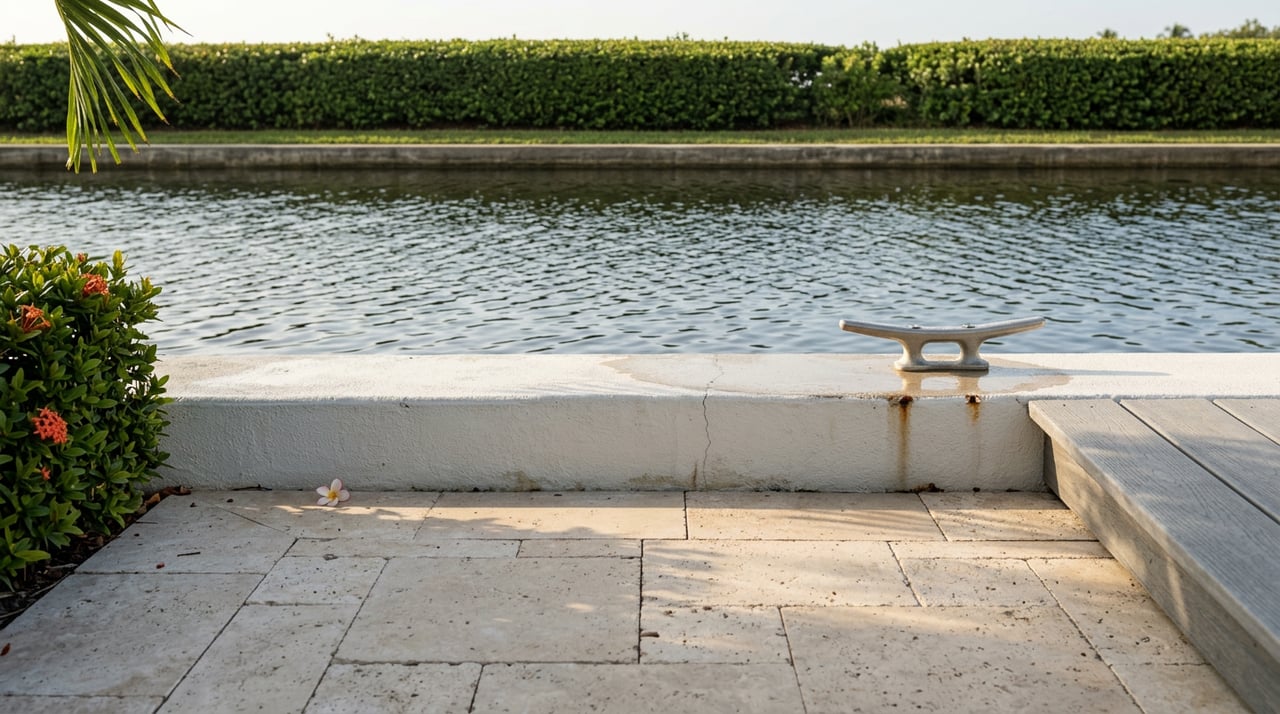
Seawalls. In most Cape Coral cases, the property line runs to the center of the canal, which means the owner owns the seawall and is responsible for maintenance and replacement. Replacement runs $150 to $300 per linear foot, so an average 100-foot frontage is $15,000 to $30,000 of latent expense on any older waterfront home. A failed seawall is not a cosmetic problem. It can damage neighboring properties and create liability.
Bridge clearance. Indirect Gulf-access canals in Cape Coral cross under fixed bridges ranging from about 9 to 15 feet of clearance. If your boat has a T-top, a hardtop, or an antenna array, the listing agent's phrase "Gulf access" is not the answer to your question. The answer is a specific route with a specific lowest clearance, measured at high tide. Deals fall apart at inspection every year over exactly this.
Neither of these items shows up on the portal. Both belong in your due diligence checklist before the appraisal contingency expires.
Where the 2026 buyer's market leverage actually sits
Citywide, Cape Coral is a buyer's market by every standard measure. Redfin reports 60 days on market in May 2026 versus 73 the year prior. Local MLS analysis puts inventory at 6 to 9 months of supply, and roughly 73% of active listings have taken a price reduction, up from 71% the prior year. The average home is selling at about 3% below list.
But the leverage is not evenly spread across the hierarchy. Well-priced non-waterfront homes in the $300,000 to $450,000 band still move relatively quickly. The largest concessions are showing up above $600,000 and on older waterfront stock with insurance challenges, aging seawalls, or higher-flood-zone exposure. A buyer who understands the tier structure can walk into a Gulf-access negotiation with real data on what a comparable freshwater or indirect-access home traded for that quarter, and use that gap as the anchor for a repair credit or a price adjustment tied to seawall age.
For readers weighing broader Southwest Florida markets, this is the interpretive lens the median obscures. Cape Coral's headline number sits at roughly $360,000. Naples medians often start north of $665,000. The Cape Coral figure blends dry-lot inventory into the same average as direct-access waterfront that trades north of $700,000. When you compare like tiers, the delta narrows sharply.
Frequently asked questions
Does "Gulf access" on a listing mean I can take any boat to open water? No. It means the canal eventually connects to the Caloosahatchee. It does not tell you whether the route passes under fixed bridges, what the lowest clearance is at high tide, or how long the run to San Carlos Bay actually takes. Ask for the route and the clearance in writing.
Did the Chiquita Lock removal affect insurance rates? Not directly. Flood zone designations, elevation certificates, and wind mitigation features drive premiums. The lock removal changed navigability and travel time to open water, which affects resale value on affected canals more than it affects carrier pricing.
Is a freshwater canal home a compromise or a strategy? Both, depending on how you use the water. If the boat is central to your weekly routine, the Gulf-access premium buys something real. If the water is view, fishing from a private dock, kayaking, and a lower insurance line item, the freshwater tier can free up $200,000 or more of budget for the house itself, a larger pool cage, or a newer build.
A closing note
The single most useful thing a Cape Coral buyer can do before writing an offer is stop reading portal medians and start reading canal maps. The Dr. Frank Dittschar practice at John R. Wood Properties | Christie's International Real Estate works with relocation and international buyers on exactly this kind of tier analysis, matching route, bridge clearance, seawall condition, and flood-zone exposure to a total carrying cost you can actually plan around. When you are ready to compare specific addresses rather than headline numbers, let's connect.